Showing posts with label proper nouns. Show all posts

Friday, April 19, 2013

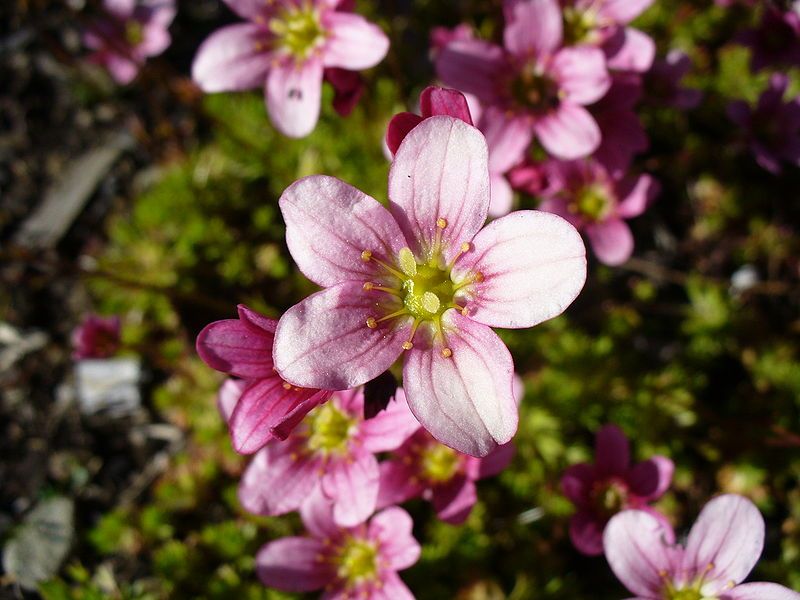
Capitalization of Flowers

"April Showers Bring May Flowers"


 For flower lovers and grammar lovers, here is some vital info on capitalizing names of flowers:


1. Do NOT capitalize names of flowers that do not already contain proper noun elements: 

                a. roses
                b. geraniums
                c. daffodils


2. DO capitalize any part of :

               a.  black-eyed Susan
               b. African daisy.

Sunday, February 17, 2013

Happy Presidents Day or Happy Presidents' Day!


Happy Presidents' Day. Or is that Presidents Day? Or Presidents' Day?

Well....it depends on which expert you ask! Here is the run down:

1. It is NOT President's Day
      a. President's denotes one President...and this holiday honors Washington and Lincoln both...as well as all presidents
     b. President's Day says that it is the day that belongs to one President (singular)
     c. It follows the rule of writing the noun first (President) then if the word does NOT end in s, put apostrophe s (President's Day)

2. Some say it is Presidents' Day
     a. The Gregg Reference Manual (my favorite handbook) cites it as such
     b. This denotes many presidents all owning one day (or at least Lincoln and Washington)
     c. It follows the rule of writing the noun first (Presidents) then if the word ends in s, put an apostrophe on the outside of the s
     d. This is the correct way to show possession of one thing to more than one "owner"---or any noun that ends in an s (glass' smudges).


3. Some say it is Presidents Day
     a. The Associated Press Stylebook cites is as such
     b. This method does not denote possession, but rather uses the word President as an adjective (actually a "proper adjective" in that it is an adjective made from a proper noun--some of the time--we will not even get into whether it is (President) or isn't (president) in this post!)
   c. This is like saying that, that is a Grisham book (as opposed to a book that Grisham owns--Grisham's book), and it is certainly  not incorrect

P.S. Capitalize president when referring to a certain president or the holiday in question!

So there you have it! More subjectivity in our English language. Happy Presidents' Day! And Happy Presidents Day!

Thursday, February 14, 2013

Happy Valentine's Day!


Happy Valentine's Day! Some tips for punctuation and capitalization of this loving holiday:


1. In a greeting (such as a card), cap all three words: Happy Valentine's Day.


2. Show possession to the singular proper noun Valentine--the day belongs to him: Valentine's Day.


3. Cap Day in the holiday because it is part of the holiday's name (as opposed to day in Christmas day in which Christmas is the name of the holiday, not day): Valentine's Day.


4. You can just call it Valentine when appropriate, but remember that Valentine is a singular proper noun, so in other contexts, do not plural it before showing possession:


a. I'm making Valentine's cupcakes.
b. I got a Valentine card.


5. If you are calling cards Valentines, keep the following in mind:


a. Still cap it--any time a proper noun element is used, it retains its capitalization: I got a Valentine this morning. (In this case, it is sometimes called a proper adjective--an adjective that is a proper noun in its non-descriptive states.)


b. Just plural it with an s (not an apostrophe s): I got some Valentines at school today.


Most of all, enjoy your Valentine's Day! :)

Sunday, January 20, 2013

Happy Martin Luther King Jr. Day!


 The third Monday in January is the day we celebrate Martin Luther King Jr.'s birthday--Martin Luther King Jr. Day. With every multi-word proper noun, there are potential errors for capitalizing and punctuating.

This is the case with today's holiday as well, especially since it has some words that are three words or fewer (potentially indicating we should not cap them, depending on where they fall within the proper noun). It has an abbreviation (Jr.), which makes for a potential difficulty with the period (or not) and even a comma (since many incorrectly think it should be written Martin Luther King, Jr {with a comma}).

So how about a little capitalization, proper noun, punctuation lesson to start the week off right? According to the Associated Press Style Book and the Chicago Manual of Style, this holiday should be written as follows (my notes below that):

Martin Luther King Jr. Day:

1. Proper nouns, including holidays, should be capitalized.

2. A proper noun containing two or more words should follow these capitalization rules:
         a. Capitalize the first and last word regardless of those words' lengths: Fourth of July, Training for Triumph, Ode to Joy
         b. Capitalize any internal words of a proper noun that are four letter or longer: World Book Encyclopedia
         c. Capitalize any internal words of a proper noun that are three words or fewer if they are not one of the following:
               i. Prepositions: Ode to Joy (NOT cap the prep to)
               ii. Articles/Noun Markers: "For the Beauty of the Earth"
        d. Capitalize any internal words of a proper noun that are three words or fewer if they are important to the title, regardless of the part of speech:
              i. "This Is My Father's World" (Is=linking verb important to title; My=pronoun important to title)
              ii. Martin Luther King Jr. Day (Jr. is important to title)


3. Capitalize Day in this holiday because it is part of the official title of the holiday (whereas Christmas day is not since day is not really the holiday's name).

4. Write Jr. with a capital J, lower case r., period following it--and no comma anywhere. As one of my handbooks tells it: Names do not contain commas!

5. Also note that the official holiday does not have Rev. or Dr. as part of it, though those are titles given to him. Neither one is given in the holiday (just like General or President is not used in George Washington's Birthday). (That holiday is also called Presidents' Day.)


6. Lastly, note that this holiday is also called Martin Luther King Day (with no Jr.).

Now you know how to write and punctuate Martin Luther King Jr. Day. Hope it's a good one!

Tuesday, July 5, 2011

Day 123: Independence Day/July 4th

The capitalization of this holiday isn't the grammar/writing issue. It's the spelling!

Of course, like any other holiday, both words are capitalized:

Independence Day

Or if written with the informal name: July 4th.

Spelling independence is a little more of an issue.

You may find long lists of rules for ent/ence vs ant/ance if you begin a study on this--many of which are so confusing and detailed (emphasis on the fourth syllable from the right, use ent!! okay..that's stretching it...) that an average person cannot decipher them much less memorize them.

When rules are too detailed and confusing, a writer is better off memorizing spellings or using spell check.

I will leave you with two simple rules for ent/ence that I think are actually helpful:

1. Use ent/ence (not ant/ance) if the root you are adding it to ends with c or g:
    diligence, innocent

    This rule actually makes sense because if you used ant/ance, the c would then say kuh (innocant--innokant) and the g would then say juh (diligant--dili-gant).

2. Use ent/ence if the root you are adding it to ends with d:
    independent

Hope this helps--and hope you had a happy July 4th!

Monday, June 13, 2011

day 116: happy anniversary or Happy Anniversary!

Today is my thirtieth wedding anniversary! Lots of well-wishes have been coming our way on FaceBook and in person--and I am in quite the celebratory mood! :)

Of course, any written words spark interesting discussions about grammar and usage (in my head at least!). And with my anniversary today and my birthday tomorrow, these greetings warrant a little "language lady" attention!

Obviously, happy, birthday, and anniversary are not proper nouns in themselves. However, when you write these as greetings, they should be capitalized.

Thus, you would capitalize

Happy Birthday!
Happy 39th Birthday! (LOL!)
Happy Anniversary!
Happy 30th Anniversary!

However, you would not capitalize these same words within a sentence when describing a birthday or anniversary: I had a happy anniversary. I enjoyed by day and had a happy birthday.

So...Happy Anniversary and Happy Birthday to me! :) and Happy Flag Day (tomorrow!) to you!

Thursday, March 24, 2011

day 71: proper adjective part ii of ii

In the last post, we introduced proper adjectives and gave instruction on capitalizing them. A proper adjective is essentially a proper noun that has been put into adjective form. Words are different parts of speech based, oftentimes, on their suffixes. For example, loveliness (with the ness suffix) is a noun...but changing a suffix often changes a word's part of speech. Thus, lovely is an adjective; loveliness is a noun.

There are many other difficulties with proper adjectives and proper noun elements within common nouns.

For example, animal, flower, plant, and tree breeds are not capitalized (i.e. husky, mockingbird, rose, poison ivy, and sycamore tree). However, if a proper adjective or proper noun element is part of the name, that part of it is capitalized (but the rest of it remains lower case):

1. black-eyed Susan (Susan is a proper noun in other contexts, so it gets capitalized here as well)

2. Australian sheep dog

3. Alaskan husky

4. Jack Russell terrier

More on caps and proper nouns later!

Saturday, March 19, 2011

day 70: the proper adjective part i of ii

As I said in an earlier post, capitalization can be extremely tricky. We have a tendency to think that the noun is the first part of speech we learn, so it's automatically simple to locate, which isn't true at all (it's true we learn it first--just not true that it is simple!). A noun can become many different parts of speech. (Take the word school--I'm going to school you (verb); The school children (adjective); She is so schoolish when she explains things (adjective); and Let's go to school now (finally, the noun). One cannot truly find the part of speech that a word is out of context. (Be careful of programs that teach parts of speech out of context if you are choosing grammar materials for your children.)

The same thing is true of capitalization--we learn it early yet it is far from simple. Cap this in this instance but not in this. Cap this when it is used as an address but not when it is used in a non-address scenario. And on and on.

Into that madness, enter the proper adjective--another capitalization nightmare, in many cases. Essentially, a proper adjective is a proper noun used as an adjective. The key to using this properly (with the proper capitalization) is knowing for sure that the word is usually a proper noun (without having context, in many cases!).

For example, the following words are capitalized when used as adjectives:

1. Spanish....Spanish speaker

2. Jesuit...Jesuit priests

3. Israeli....Israeli captives

4. French...French braid

More confusing to come tomorrow! Stay tuned to the English blog! (Yes, cap that proper adjective!)