Showing posts with label vocabulary. Show all posts

Wednesday, July 31, 2013

WORDY WEDNESDAY--Prefix ir


The prefix ir is an interesting prefix for a number of reasons:

1. It means not. There are many prefixes that can mean not, such as de, a, un, non; however, ir also means not, which is interesting to me because I don't think it sounds like it should mean not! To me, it sounds like it should mean again or repeating or something besides not!

2. It only comes before base words that begin with R. In other words, you do not put ir in front of most any word to mean not, like you often do with un or non. 

3. This isn't really interesting--but I like to say it whenever I teach about prefixes. A prefix is a letter or group of letters that you "affix" (which is why it and suffixes are called affixes) to the beginning of a word. It is important to remember that a prefix does not change the spelling of the base word. That is especially crucial in spelling ir words because the ir precedes an R already--and you must keep the base word's spelling, so when you add this prefix to a word, you will ALWAYS have two R's in a row: irregular, irresponsible, etc.

4. It is most often put before a word that is should never come before: regardless. We hear people constantly say irregardless, which is, of course, an oxymoronic word because less means without (or not) and ir means not. I guess that makes it sort of like using a double negative! You do not put ir before regardless because regardless already means without regard. With ir in front of it, you are saying not without regard, I guess.... Anyway, irregardless is not a word. So don't use it. Okay? :)

Note: It is correct, however, to use irrespective, which is a substitute (some of the time) for when you are tempted to say irregardless.

However, there are many base words that begin with R that can have ir put before them to mean NOT or the opposite of what the base word means before ir is added to it.

Here is a list to get you started. Notice how if you take the ir off, you have a positive base word (or one that means yes--yes regular, yes responsible, yes revocable, etc.) However, with the ir, the word means not---not regular, not responsible, not revocable, etc.

Remember: You know more than you think you know!

And remember: Use what you already know to learn even more!

  • irregular
  •  irresponsible
  • irrevocable
  • irrefutable
  • irradiate
  • irreconcilable
  • irredeemable
  • irreducible
  • irrefutable
  • irregularity
  • irrelevant
  • irreverence
  • irreligious
  • irreparable
  • irreplaceable
  • irreversible
  • irresolute
  • irretrievable
  • irresistible
  • Irrelevant
  • Wednesday, May 29, 2013

    WORDY WEDNESDAY: peak, peek, pique

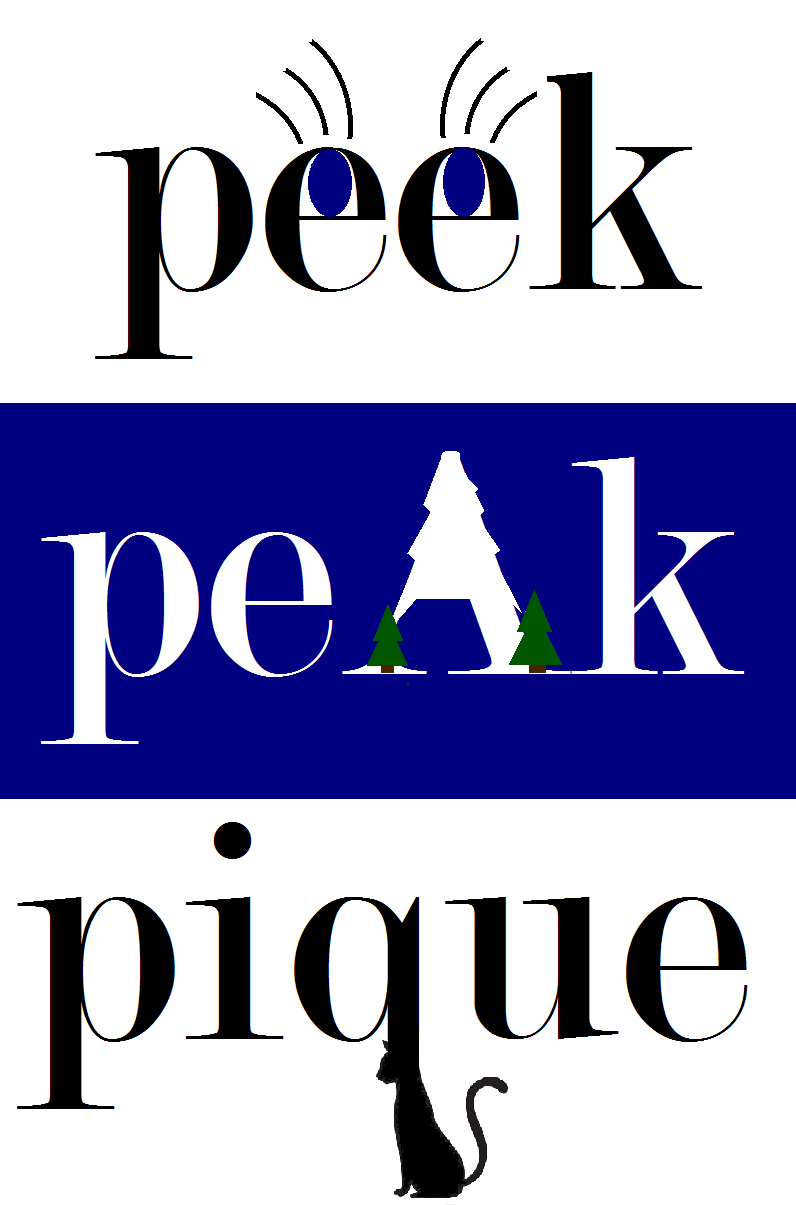
    Picture by Lisa Rivera


    Oh my word! My tips and tricks for peek, peak, and pique aren't nearly as cute and memorable as the ones Lisa Rivera has created in the picture above! In our curriculum materials, and on the web, I don't have access to that kind of graphic representation of words. I might have to look into that in the future!

    In the meantime, her picture says a thousand words--okay, well really just three:

    1. Peek
        a. Verb meaning a secretive look--And then I am going to peek into the package.
        b. Noun meaning a small glance--She took a peek into the package.
        c. Thus, the two EYES in the middle of the word peek in the graphic. (We do have that in our books, but we just tell it not show it--showing it is so much better!)


    2. Peak
       a. Verb meaning to reach the highest point---They said that the dancer was going to peak at just the right time.
       b. Noun meaning the highest point---They reached the mountain's peak.
       c. Adjective meaning highest point---They were at their peak performance.
       d. Love the graphic with the A being a high, mountainous point. 


    3. Pique'
       a. Verb meaning to arouse curiosity--They really tried to pique' our attention with those pictures.
       b. Noun meaning resentment--He slammed the door in a fit of pique'. (Use it interchangeably with "quick anger."
       c. Noun or adjective meaning nubby fabric--He wore his pique' bright yellow polo shirt.
       d. The verb is the most common meaning; and thus, we see the cat at the bottom of the q in the picture because "curiosity killed the cat." CLEVER!

    If you don't have that great picture above, here are ways to remember these three:

    1. Peek--has two e's, and we have two eyes and peek with our eyes
    2. Peak---not two e's OR They have a lEAK in the pEAK of their roof.
    3. Pique'--Ends with que---question begins with que

    Happy Wordy Wednesday! If you like our blog, share it with others! Put the FB link on your timeline, so others can learn with Language Lady each week! Smile...

    Wednesday, May 8, 2013

    WORDY WEDNESDAY: Prefixes, Suffixes, Roots, Oh My!


     When Joshua and I teach vocabulary, we try to do a few things:


    1. Relate the word to anything we think the students might already know. ("Aquaduct? Well, you know what aquatic means, don't you?")


    Of course, this is where we say, "You know more than you think you know!"


    2. We ask the students if they can tell us anything about the word based on the context. Is it happy or sad? Is there a word near that word that helps you?


    3. We help them examine the type of word it is. We say over and over to them that OUS words are often adjectives (delicious) and ATE words can often be verbs.


    4. We help the students examine roots and affixes.
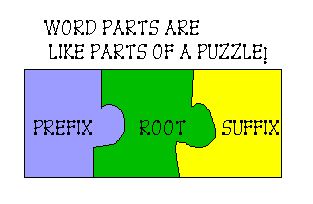
        a. Prefix--an affix ("stuck on") to the beginning of a word
        b. Suffix--affix added to the end of a word


    We also give the students tools all the time. Below is a list of prefixes and suffixes that we give to our students and discuss with them, along with their meanings.

    Be a lifelong student! If you are an adult, these vocabulary tips will still help you every day.

    (a)   GEN--birth, race, kind
    generous, generate, generation, geneology, gender

    (b)   DIC, DICT, DIT--tell, say, word
    dictate, verdict, edict, contradict, predict, diction, indict

    (c)    SPEC, SPIC, SPIT--look, see
    perspective, aspect, spectator, spectacle, suspect   
            
    (d)   SUPER, SUR, SUM—above
    surpass, summit, supersede, superstition

    (e)   TENT, TENS, TEND, TENU--stretch, thin
    tension, extend, tendency, tendon, tent, distend

    (f)     TRANS—across
    transfer, transient, transitory, transgress, transport

    (g)   DOC, DUC, DAC--teach, lead
    conduct, document, doctrine, induce, indoctrinate

    (h)   CO, CON, COM-with, together
    company, collaborate, comply, congruent,

    (i)     VERS, VERT—turn
    convert, revert, subvert, divert, diverse, extrovert, versatile

    (j)     LOC, LOG, LOQU--word, speech
    eloquent, logic, apology, monologue, dialogue, prologue

    (k)   SEN--feel, sense
    sensitive, sensation, consent, dissent, assent, sentiment        
                                             
    (l)     DE--away, down, off
    denounce, defraud, decry, deplete, devoid, defile

    (m) NOM, NOUN, NOWN, NAM, NYM--name, order, rule
    anonymous, nominate, renounce, renown, misnomer         
                       
    (n)   CLA, CLO, CLU--shut, close
    closet, enclose, disclose, include, conclude, seclude

    (o)   VO, VOC, VOK, VOW—call
    vocal, advocate, vocation, convoke, revoke, avow         
                            
    (p)   MAL--bad
    malicious, malady, dismal, malign, malevolent

    (q)   FRA, FRAC, FRAG—break
    fracture, fraction, fragment, fragile, frail, fractious          
                            
    (r)    OB—against
    objective, obsolete, obscure, obstruct, obstinate

    (s)    SUB—under
    submissive, subordinate, sublime, subtle, subversion       
                         
    (t)     AB--from, away 
    abandon, abhor, abstain, absolve, abstruse, abstract 

    (u)   GRESS, GRAD—step
    progress, regress, gradual, digress, degrade, transgress

    (v)   SEC, SEQU—follow
    second, sequel, sequence, consequence, prosecute

    (w)  PRO--much, for, a lot
    prolific, profuse, prodigal, prtracted, prodigy, propensity     
                       
    (x)   QUE, QUIS--ask, seek
    inquire, question, request, quest, query, acquire, querulous 

    (y)   SACR, SANCT, SECR—sacred
    sacrifice, sanctuary, sanctify, sanction, consecrate

    (z)    SCRIB, SCRIP—write
    scribble, describe, script, prescribe, ascribe, inscribe 

    (aa)  PATHY, PAS, PAT—feeling
    apathy, sympathy, empathy, antipathy, passionate

    (bb)  DIS, DIF—not
    disdain, dissuade, dismay, disparate, disparage

    (cc) CIRCU—around
    circumference, circulation, circumstances, circumvent 

    (dd) NON, UN, IN, AN, A--no or not
    nonviolent, uncooperative, inappreciative, anonymous 

    (ee) AD--to       
    adhere, adjective, addict, adverb                       

    (ff)  INFRA—below
    infrastructure, infraction, infrared, infra-bass


    Wednesday, January 9, 2013

    Strengthlessnesses---Longest Word With One Vowel


    Wordy Wednesday!


    Welcome to Wordy Wednesday! Did you know that strengthlessnesses is the longest word containing only one (albeit very repeating) vowel? Neither did I. And I don't really care for it. I mean, it is cumbersome to say--and that is a whole lot of e's and s's to remember to spell the crazy word.

    But I love unique and unusual--and strengthlessnesses is definitely both of those! Here are some vitals about this "longest word containing only one (albeit very repeating) vowel":

    1. It is a noun--did you know that when a word ends in ness, it is almost always a noun? This helps with standardized testing greatly. Ness words are nearly always nouns, so in a "fill in the blank" type of assignment, if the word in question ends in ness, it has to go in a spot where a noun fits.

    Tricky Trick to Help It Stick: We have students learn key words to remember things. For instance, to remember that ness words are nearly always nouns, memorize a key word or two that you know is a noun and that ends in ness.

    Other ness nouns: happiness, hopefulness, craziness, gratefulness, joyfulness, smartness

    2. It has to do with having strength--we teach our students to think about what you already know--anytime--but especially when approaching a new word. Is there anything about the word strengthlessnesses that you already know?
         a. You know what its base means. You already what strength means!
         b. You know that less means less or not having that quality. (We do a lot of root and affix studies here!)
     
    Because of those two "things you already know," you can know that strengthlessnesses has something to do with not having strength (i.e. less strength).

    Note: You know more than you think you know! Repeat this over and over to yourself: "I know more than I think I know. I know more than I think I know." Use what you know to learn more!

    3. It can be spelled syllable-by-syllable (if you are a biphonic man or biphonic woman!): strength-less-ness-es.

    4. You can also make up a trick to remember how to spell it, such as "It contains four e's and six s's. Or that it has four syllables--which tells you that it will have at least four vowels in it (or y's acting like vowels)--because a syllable always contains at least one vowel. A vowel is what makes a syllable!

    5. You can learn the variations of this word--because you can remember from your vocabulary studies with Language Lady that suffixes (affixes added to the ends of words) might change the SPELLING of the base word (pity is changed to piti in pitiful) but does not change the MEANING of the base word. Even with three suffixes added (less, ness, and es), the base word of strength still means strength.
                 a.  stengthless--adjective meaning without strength (less words are often adjectives!)
                 b. strengthlessly--adverb meaning without strength (ly words are often adverbs)
                 c. strengthelessness--a noun describing someone or something that is without strength (ness words are often nouns)
                d. strengthlessnesses--a noun that means more than one someone or something that is without strength (es makes the word plural).


    So there you have it--the longest word with only one repeating vowel. Did you know that you could learn so much from one word? You know a lot more than you think you know! Smile...

    .


    Wednesday, June 29, 2011

    Day 122: Wordy Wednesday—SUPER!

    More root word learning for this week’s Wordy Wednesday. But before that, I have to ask if you are using what you already know? Are you examining unknown words and asking yourself  if there is anything about that word that you already know—a root, prefix, or suffix?

    Today’s root: SUPER, SUR, SUM   

    Meaning: ABOVE

    What do you already know about this ABOVE root:
    1. surpass—to go above and beyond
    2. summit—above; the high mountain or peak
    3. supersede—to be above in authority,  etc.
    4. superstition—a  belief that is ABOVE the normal
    5. super star—a star above others


    Thursday, June 23, 2011

    day 120: wordy wednesday—root “spec”


    Do you remember how I talked earlier about how we (and our students if we are teachers) know much more than we think we do! There is no place that this is more apparent than vocabulary learning!

    Root words, and sometimes even syllables, have meaning. And we often already know meanings of bits and pieces that we can put together to gain more knowledge. (If you know a foreign language, you will have even more success unlocking unknown words or parts of words since much of our language is taken from other languages.)

    How can you use this concept to help you or your students? When you come to an unfamiliar word, don’t assume that you do not know it. Look more closely at the word. (And help your kids to do the same—question them all the time: “What do you know about the ‘aqua’ part of aquamarine?” [Or even, “What do you know about the ‘marine’ part?”)

    Today’s  root is SPEC, SPIC, or SPIT

    It means LOOK or SEE

    What do you already know about these “spec,” “spic,” and “spit” words?
    1. Perspective—seeing a point of view
    2. Aspect—one part or one thing you can see
    3. Spectator—one who sees
    4. Spectacle—a sight to see
    5. Suspect—a person you see that might be guilty
    6. Others???
    Keep reading. Keep asking yourself what you already know!

    Thursday, June 9, 2011

    day 115: wordy wednesday


    Now that we know how to spell the word Wednesday, we are going to add a new feature to Language Lady 365. If you desire to increase your vocabulary for professional or personal reasons; are preparing for standardized testing or college; or want to help your kids learn vocabulary better, you won’t want to miss Wordy Wednesdays! (Yesk I know it's Thursday--I didn't get this up last night!)

    Wordy Wednesday will be a vocabulary-building day each week. Sometimes I will introduce a “word that everybody should know” type of word from test preparation or collections with these types of lists. Other times we will focus on prefixes, suffixes, and roots. Basically, all types of vocabulary learning—your weekly “shot” of wordsmith learning!

    At the beginning of the year, I described the importance of roots and affixes in helping our children learn vocabulary: “Discussing words (roots, affixes, etc.) should be a part of our daily discussion with our kids. Even if our kids go to school, we have to look at ourselves as our children’s first teachers. There are so many things that we can teach them casually—homeschoolers or not.”

    Not long ago in literature class, our son (Joshua, one of our TFT teachers) asked the students what words they knew that contained the prefix “pro,” meaning “for.” He got the usual answers—pro-life; prolific; pro-football, etc. And then his clever “little brother,” Josiah, said, “’Propane’---means that we are ‘for pain’!” Have fun with vocabulary building—and your kids will not forget it, for sure (nor will you)!

    So today, we will start with a common root—a root that can help you unlock the meaning of many other words: gen.

    GEN is a root meaning birth, race, or kind.

    From this root, we get many common words that most of us are familiar with, including, but not limited to, the following list:
    1. Generous
    2. Generate
    3. Generation
    4. Genealogy
    5. Gender
    6. Genocide
    7. Generic

    But roots are not limited to the beginnings of words—they are found buried within longer words as well. Consider the following words with gen somewhere in them. How does the meaning of gen—birth, race, or kind—fit into the meanings of these words:
    1.    Agency
    2.    Intelligence
    3.    Resurgent
    4.    Agenda
    5.    Allergen
    6.    Pathogen
    7.    Oxygen
    8.    Carcinogen
    9.    Divergent
    10. Emergency
    11. Degenerate
    12. Negligence
    13. Legends
    14. Estrogen
    15. Homogenate
    16. Ingenuity

    Wednesday, April 13, 2011

    day 88: rise, lie, sit overview

    Moving on from National Poetry Month--though if someone would like to send poetry, I will still publish it until the end of April.

    With Easter so close, I thought we would look at a tricky Wacky Word pair--rise and raise (followed by sit and set and lie and lay since you really should learn them together, if possible).

    First, an overview:

    Rise and sit have I's--and lie does too.
    "Coz these are things that I, all by myself, can do.
    Raise, set, and lay are words that you choose
    When each one has an object after it to use.

    What does that mean? It means that I and rIse, I can sIt, and I can lIe without any object.

    But I raise something; I set something; and I lay something....

    More tomorrow...then one at a time. These are confusing ones, but with LL's tips and tricks, you will be raising your head high, sitting with grammarians with confidence, laying your dictionary aside, rising up to the occasion, setting the stage for future success, and lying down at night, knowing that you understand lie, rise, and sit! :)

    Friday, March 25, 2011

    day 73: send in the cavalry or calvary?

    Another confusing word pair--cavalry and calvary. And yes, we will see them written incorrectly over the next few weeks as Easter approaches! How can you differentiate between the two in this Wacky Word pair?

    As a Christian, I have a unique way of remembering calvary and cavalry--see it helps you!

    1. Cavalry--

    a. A group of miliary people
    b. We often say, "Send in the cavalry" to indicate help is needed
    c. I remember this by remembering that the V comes before the L---Victory comes first if the cavalry comes caValry.

    2. Calvary--

    a. The hill on which Jesus was crucified
    b. I remember this by remembering that the L comes before the V--Calvary denotes Love--CaLvary

    Thursday, March 24, 2011

    day 72: does winnie the pooh like to wander or wonder?

    Another quick tip for you!
    1. Wonder is spelled like ponder—and they both mean to think
    2. Wander is spelled like land—and you wANDer all over the lAND (or wAnder has an A in it and Area has an A in it—and you wAnder in an Area)
    So…does Winnie the Pooh like to wander or wonder?
    1. Pooh: “I’d rather be wondering.” OR
    2. Pooh: “I’d rather be wandering.”
    Well, I’ll give you a little hint. My daughter was a thinker—always thinking and/or reading---as a child (and still is!). When she had to do something she didn’t want to do—or her thoughts were interrupted by something, she would say, “I’m just like Winnie the Pooh. I’d rather be wondering!” In other words, she, just like Pooh Bear, would rather be pondering/thinking! J

    Monday, February 21, 2011

    day 48: capitol building? capitol city? capital city?

    Last "Presidents' Day" post, honest! In discussing how to punctuate Presidents' Day and when to capitalize and when not to capitalize president, I can't help but bring up another commonly-miswritten error--that of capitol and capital.

    Here is the low-down, along with a trick or two to help you remember the details:

    1. Capital
        a. Means upper-case letter--most people do not use this word incorrectly here
        b. Can be used as an adjective to mean primary--that was a capital idea!
        c. Can be used as an adjective to describe punishable by death--capital punishment
        d. A city that is the seat of the government for a state--this is where people sometimes use capitol instead


    2. Capitol
       a. Refers to the building in which the U.S. Congress meets (when it is capitalized)
       b. Refers to a state's main government building (when it is not capitalized)
      c. Tricky Trick to Help It Stick: Only use capitol when referring to a goverment building---capitol does not have any other uses; all other uses need capital

    Saturday, January 22, 2011

    day 21: further vs farther

    January is "word" month here at Language Lady 365, so today I have another Wacky Word pair for you...and more"Tricky Tricks to Help It Stick"!

    Do you know when to use further? How about when to use farther? Most people do not--I know I didn't know until I began writing language arts books!

    Here's the scoop:

    1. Farther is for going distances: I ran farther than he did OR He drove farther than I did.
    2. Further is for other uses, such as thinking or understanding: Let me explain this further.

    Of course, I have "Tricky Tricks to Help It Stick":

    1. fArther--has an A in it and is for Area...distances
    2. fUrther--has a U in it and is for Understanding (you further your thinking or go further in college or make your point further..)

    Hope this helps! Don't forget to join us next week for "Homework Help" here at LL 365!

    Friday, January 21, 2011

    day 19: loan some cash; lend a hand?

    It was so simple in my mind—banks loan money; friends lend a hand. Use loan for money and lend for everything else. Until I found out that, that is the British rules, not the US unwritten rules! Agggh….

    US rules follow the loan is a noun and lend is a verb. Stuffy grammarians would not approve of my “loan money; lend a hand” philosophy.

    So…if you are not concerned about impressing the grammarians of the world (especially US ones):
    1. Always loan money (or never do if you want to keep friends and family!)
    2. Always lend a hand…and anything else someone wants to borrow (but do not expect to get it back!)

    If you are a stickler for US vs British grammar rules, and you are in the US:
    1. lOAn is a nOUn (two vowels each)
    2. lEnd is a vErb (one noun; e)
    Regardless, always remember to lend a hand to those in need! Smile…

    Wednesday, January 19, 2011

    day 18: i “wonder” as i “wander”

    In that old hymn, “I Wonder as I Wander,” is the writer thinking while he meanders or meanders while he’s thinking?

    When Winnie the Pooh would rather be wondering, would he rather be thinking or would he rather be meandering?

    These age-old questions can now be answered—with a quick tip from LL 365!
    1. Wonder is spelled like ponder—and means the same thing—to think
    2. Wander is spelled like land—and you wANDer all over the lAND—you roam around (or meander)
    Another quick tip—wander has an A in it and Area has an A in it—you wAnder around an Area…

    Tricky Tricks to Help It Stick
    1. wONDER—pONDER—think
    2. wANDer—lAND—roam the land

    Tuesday, January 18, 2011

    day 17: pop quiz—allude, elude, allusion, illusion….answer key!

    Answer Key:

    1. The word was so allusive/elusive; it just wouldn’t come to me.

    Hint: Elude and exclude look similar. “I excluded that song from the program because it eluded me.”


    2. He made an illusion/allusion/elusion to our previous conversation.

    Hint: Allusion related to allude. “What he alluded to is ludicrous.” Means to refer to something.


    3. The ride gives you the allusion/illusion that you are on a mountain top.

    Hint: Illusion comes from illustrate. A picture….gives you the picture or feeling of something else.


    4. I excluded the word from the program because its spelling alluded/eluded me.

    Hint: Eluded—excluded. Elude means “not able to grasp.”


    5. What did he elude/allude to?

    Hint: Allude/allusion—something you refer to. “What he alluded to was ludicrous.”


    6. They used Kleenexes to give you the allusion/illusion of fabric.

    Hint: Illusion is a facsimile or picture. Related to illustrate.


    7. What he alluded/eluded to was ludicrous!

    Hint: “What he alluded to was ludicrous.”


    8. What was his illusion/allusion to your situation?

    Hint: Allude/allusion—referring to something else.


    9. Allusion/illusion is related to hallucination.

    Hint: Illusion is related to hallucination—pictures that are not there.


    10. He made an elusion/allusion to our previous conversation.

    Hint: Allusion is to refer to something else; elusion is to be out of your grasp. He referred to the previous conversation…not that he couldn’t grasp it.

    Monday, January 17, 2011

    day 17: pop quiz—allude, elude, allusion, illusion

    1. The word was so allusive/elusive; it just wouldn’t come to me.
    2. He made an illusion/allusion/elusion to our previous conversation.
    3. The ride gives you the allusion/illusion that you are on a mountain top.
    4. I excluded the word from the program because its spelling alluded/eluded me.
    5. What did he elude/allude to?
    6. They used Kleenexes to give you the allusion/illusion of fabric.
    7. What he alluded/eluded to was ludicrous!
    8. What was his illusion/allusion to your situation?
    9. Allusion/illusion is related to hallucination.
    10. He made an elusion/allusion to our previous conversation.

    Answer Key with hints coming tomorrow! Smile…

    Sunday, January 16, 2011

    day 16: it was just an “illusion” (or was it an “allusion”?)

    Adding to the alluded/eluded and allusive/elusive quandary is the illusion/allusion Wacky Word pair! Again, looking at roots and affixes can be a great help.

    Let’s start with allusion—since we had alluded yesterday. (Yes, you read that right—the roots are the same!)

    1. Allusion (allude)
    a.      Related to ludicrous: Hint—“What he alluded to was ludicrous!”
    b.     Related to allusion—“He made an allusion to our previous conversation.”
    c.      If you remember the allude/ludicrous (What he alluded to was ludicrous!), you will also remember allusion—allusion is something you allude to.
                                                                            i.     Allude is the verb---“What did he allude to?”
                                                                          ii.     Allusion* is the noun—The thing—“What was his allusion to your situation?”
    2. Illusion
          a. Related to illustrate—See that root?
                  i. Illustration is a picture
                 ii. Illusion is an abstract picture
    b.     Used to mean a facsimile or something that appears different than it is
    i. “The ride gives you the illusion that you are on a mountain.”
    ii. “They used Kleenexes to give you the illusion of fabric.”
    iii. “Her success is just an illusion."

    c.  Illusion is also related to hallucination—seeing things that are not really there!

    *Note: A more advanced vocabulary technique that you will learn this year on LL 365 is “illustrated” in suffixes—tion and sion generally signify a word is a noun.

    Saturday, January 15, 2011

    day 15: when a word just “eludes” you (or is that “alludes” you?)

    Another Wacky Word pair that is commonly confused is that of “elude” and “allude.” Here is another time when roots and spin-offs of a word come in handy.
    1. Elude
      1. Related to elusive—“The word was so elusive. It just wouldn’t come to me.”
      2. I think of elude with exclude—I excluded the word from the program because its spelling eluded me. (That may or may not help you!)

    1. Allude
      1. Related to ludicrous: Hint—“What he alluded to was ludicrous!”
      2. Related to allusion—“He made an allusion to our previous conversation.”

    Tricky Tricks to Help It Stick:
    1. What he alluded to was ludicrous (allud/lud).
    2. The word was excluded from the program because its spelling eluded me (exclude/elude).

    Thursday, January 13, 2011

    days 13 & 14: roots and affixes list


    I am putting all of the roots and affixes I want to share (from our CQLA curriculum) together for two days (rather than dividing them up in two entries). Feel free to print them off, give a sheet to each of your kids, tape it on the fridge, work on a root or affix a week…however it can help you or your kids/students.

        (a) GEN--birth, race, kind                                                              
     generous, generate, generation, geneology, gender    
               
    b) DIC, DICT, DIT--tell, say, word
            dictate, verdict, edict, contradict, predict, diction, indict
      
        (c) SPEC, SPIC, SPIT--look, see
     perspective, aspect, spectator, spectacle, suspect     

               
    d) SUPER, SUR, SUM--above
            surpass, summit, supersede, superstition
      
       
       (e) TENT, TENS, TEND, TENU--stretch, thin                                           
     tension, extend, tendency, tendon, tent, distend         

    (f) TRANS--across
    transfer, transient, transitory, transgress, transport
      
        (g) DOC, DUC, DAC--teach, lead                                         
              conduct, document, doctrine, induce, indoctrinate                    

     (h) CO, CON, COM-with, together
    company, collaborate, comply, congruent,

    (i)              VERS, VERT--turn                                                                      
     convert, revert, subvert, divert, diverse, extrovert, versatile          
      
    (j) LOC, LOG, LOQU--word, speech
            
            eloquent, logic, apology, monologue, dialogue, prologue
        (k) SEN--feel, sense                                                                                  
      sensitive, sensation, consent, dissent, assent, sentiment  
                     
    (l) DE--away, down, off
    denounce, defraud, decry, deplete, devoid, defile
      
        
        (m) NOM, NOUN, NOWN, NAM, NYM--name, order, rule
    anonymous, nominate, renounce, renown, misnomer                                                      

    (n) CLA, CLO, CLU--shut, close
              closet, enclose, disclose, include, conclude, seclude
      
          
        (o) VO, VOC, VOK, VOW--call                                                      
    vocal, advocate, vocation, convoke, revoke, avow     
                            
     (p) MAL--bad
              malicious, malady, dismal, malign, malevolent
      
          
        (q) FRA, FRAC, FRAG—break
    fracture, fraction, fragment, fragile, frail, fractious                                                                                        

       (r) OB--against
              objective, obsolete, obscure, obstruct, obstinate
      
            
        (s) SUB—under
              submissive, subordinate, sublime, subtle, subversion                                                                                                        

    (t) AB--from, away
     abandon, abhor, abstain, absolve, abstruse, abstract
      
           
        (u) GRESS, GRAD—step
    progress, regress, gradual, digress, degrade, transgress                                                                       

     (v) SEC, SEQU--follow
              second, sequel, sequence, consequence, prosecute
      
      
         (w) PRO--much, for, a lot 
    prolific, profuse, prodigal, prtracted, prodigy, propensity                                                                   

      (x) QUE, QUIS--ask, seek
               inquire, question, request, quest, query, acquire, querulous
      
         
         (y) SACR, SANCT, SECR—sacred
    sacrifice, sanctuary, sanctify, sanction, consecrate                                                                   


     (z) SCRIB, SCRIP--write     
                         scribble, describe, script, prescribe, ascribe, inscribe
      
                                                                 
       (aa) PATHY, PAS, PAT--feeling               
              apathy, sympathy, empathy, antipathy, passionate                                  


     (bb) DIS, DIF--not
                                      disdain, dissuade, dismay, disparate, disparage
      
      
      (cc) CIRCU--around
    circumference, circulation, circumstances, circumvent                                                            


     (dd) NON, UN, IN, AN, A--no or not
      
    nonviolent, uncooperative, inappreciative, anonymous
      
      
      (ee) AD--to  
              adhere, adjective, addict, adverb
                                                                              

    (ff) INFRA--below
     infrastructure, infraction, infrared, infra-bass
      
      
      (gg) AMBI—both
      ambidextrous, amibguous, ambition, ambivalent                                                                                

     (hh) EPI--on
     epidemic, epic, epitomy, episode