Showing posts with label confusing words. Show all posts

Sunday, February 9, 2014

Rise/Raise and Sit/Set and Lie/Lay Tips

Many hands rising the sky together, children and adults - stock photo


Sit and rise have I's--and lie does too.
"Coz these are things that I, all by myself, can do.
Set, raise, and lay are words that you choose
When each one has an object after it to use.


I am going to take sit/set; rise/raise; and lie/lay one pair at a time over the next few days; however, I wanted to start the series (or at least this second post) with teacher tips.

I have watched kids with glossed over eyes as I have tried many techniques and order to teach these tricky pairs, and have had many difficulties “rise” up and confuse them (and me!):

  1. People lie; things get laid down—sort of works, but it’s not just people who lie—the sun lies on the horizon; the city lies asleep in the early morning hours; the animal lies in the middle of the road….you get the idea
  2. People lie; things get laid down—but it still didn’t help with the sit/set and rise/raise dilemma
  3. The past tense of lie (as in yesterday I lay down to take a nap…don’t I wish!) is the same as the current tense of lay (as in I am going to lay the book on the table)—poor kids!
  4. And so many more!

So here are a few tips that I would like to pass along to those trying to teach these rules:

  1. Consider a rhyme or mnemonic like the one above to reinforce the I’s in sit, rise, and lie—when we remind students that I do those things—and they have I’s in them, we are helping them remember that these do not have objects following them.
  2. Do NOT start with lie. It is by far the most confusing of the trio—and I try to do that one after rise and sit (with fewer exceptions, etc.) are established in students’ minds.
  3. DO start with sit. Set has the same tense for all—present; past; and past participle. Today I set the table; yesterday I set the table; before that I have set the table.
  4. If you are teaching from a Christian standpoint, Jesus and God are prime examples of rise/rose/has risen and raise/raised/has raised:
    1. Jesus will rise from the grave. God will raise Jesus.
    2. Jesus rose from the grave. God raised Jesus.
    3. Jesus has risen from the grave. God has raised Jesus.

  1. Suggested order: sit/set; rise/raise; and lie/lay.

Happy teaching—and learning! J


Saturday, January 4, 2014

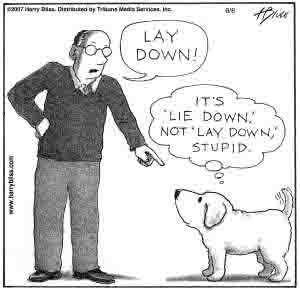
Lie vs Lay


Sit and rise have I's--and lie does too.
"Coz these are things that I, all by myself, can do.
Set, raise, and lay are words that you choose
When each one has an object after it to use.

Here we are at the end of our Wacky Word pair—lie and lay.

Remember these lie and lay tips:

  1. Lie has an I—and I alone can do it (it is not done TO something else).
    1. I lie in bed at  wide awake.
    2. Yesterday I lay awake half the night.
    3. Before that I had lain down when the cat jumped on me.

  1. Lie means to stretch out in a flat position—anybody or anything can lie, as long as it does it by itself (i.e. it is NOT laid)
    1. She lies down with a headache every day.
    2. The sun is lying low.
    3. She has lain down for a nap.

  1. Lay must have an object following it—something that it is being laid down.
    1. Lay your book on the table.
    2. He laid his money down.
    3. She has laid the towels in the sun.


Okay…the tenses for the three:

1. Lie
            a. Base form: lie—Tomorrow I will lie down early. (Remember—no object; down is an adverb; early is an adverb here, not an object.
            b. Past simple: lay—Yesterday I lay in the sun. (Tricky part: past tense of lie is lay; lay is also the present tense of lay—to lay something down!)
            b. Past participle: lain—They have lain low ever since then.
            d. Third person singular: lies—The dog just lies under the tree all day long.
            e. Present participle/gerund: lying—The sun was lying on the horizon for so long today.


2. Lay
      1. Base form: lay—I lay the kids’ clothes out every day. (Tricky: lay is the base form of lay (to put something down; it is also the past tense of lie—to stretch out by yourself or itself.)
      2. Past simple: laid—Yesterday I laid the pink pants out for Jon.
      3. Past participle: laid—Before the dog came in, I had already laid his bones out.
      4. Third person singular: lays—He lays the book down every night at ten.
      5. Present participle/gerund: laying—I am laying the swim suits out to dry.


Tricky Tricks to Help It Stick

  1. Again, do sit/set first (all same base word for tenses of set!) or rise/raise (since many people get this pair correct even if they do not know sit/set and lie/lay very well).
  2. Do rise/raise after sit/set or sit/set after rise/raise (saving lie/lay for last).
  3. Memorize acronym/rhyme to cement the fact that all three with I’s are the ones that are done by someone or something (not to something).
  4. When you get to lie and lay, to lie first all by itself until it is memorized. Then do lay. (I am starting to wait a week between the two with lots of practice on lie during that week before moving on to lay.)


I’m officially done with sit/set; rise/raise; and lie/lay! Time to move on. I feel that I have risen to the occasion and am glad that I did not sit idly by and lay these tricky ones aside. Glad I did not let people lie in agony over these Wacky Words. I would like for all of us to set our grammar burdens aside and raise a toast in honor of sit/set; rise/raise; and lie/lay! J (Last time for a while, honest!)

Wednesday, July 31, 2013

WORDY WEDNESDAY--Prefix ir


The prefix ir is an interesting prefix for a number of reasons:

1. It means not. There are many prefixes that can mean not, such as de, a, un, non; however, ir also means not, which is interesting to me because I don't think it sounds like it should mean not! To me, it sounds like it should mean again or repeating or something besides not!

2. It only comes before base words that begin with R. In other words, you do not put ir in front of most any word to mean not, like you often do with un or non. 

3. This isn't really interesting--but I like to say it whenever I teach about prefixes. A prefix is a letter or group of letters that you "affix" (which is why it and suffixes are called affixes) to the beginning of a word. It is important to remember that a prefix does not change the spelling of the base word. That is especially crucial in spelling ir words because the ir precedes an R already--and you must keep the base word's spelling, so when you add this prefix to a word, you will ALWAYS have two R's in a row: irregular, irresponsible, etc.

4. It is most often put before a word that is should never come before: regardless. We hear people constantly say irregardless, which is, of course, an oxymoronic word because less means without (or not) and ir means not. I guess that makes it sort of like using a double negative! You do not put ir before regardless because regardless already means without regard. With ir in front of it, you are saying not without regard, I guess.... Anyway, irregardless is not a word. So don't use it. Okay? :)

Note: It is correct, however, to use irrespective, which is a substitute (some of the time) for when you are tempted to say irregardless.

However, there are many base words that begin with R that can have ir put before them to mean NOT or the opposite of what the base word means before ir is added to it.

Here is a list to get you started. Notice how if you take the ir off, you have a positive base word (or one that means yes--yes regular, yes responsible, yes revocable, etc.) However, with the ir, the word means not---not regular, not responsible, not revocable, etc.

Remember: You know more than you think you know!

And remember: Use what you already know to learn even more!

  • irregular
  •  irresponsible
  • irrevocable
  • irrefutable
  • irradiate
  • irreconcilable
  • irredeemable
  • irreducible
  • irrefutable
  • irregularity
  • irrelevant
  • irreverence
  • irreligious
  • irreparable
  • irreplaceable
  • irreversible
  • irresolute
  • irretrievable
  • irresistible
  • Irrelevant
  • Wednesday, May 29, 2013

    WORDY WEDNESDAY: peak, peek, pique

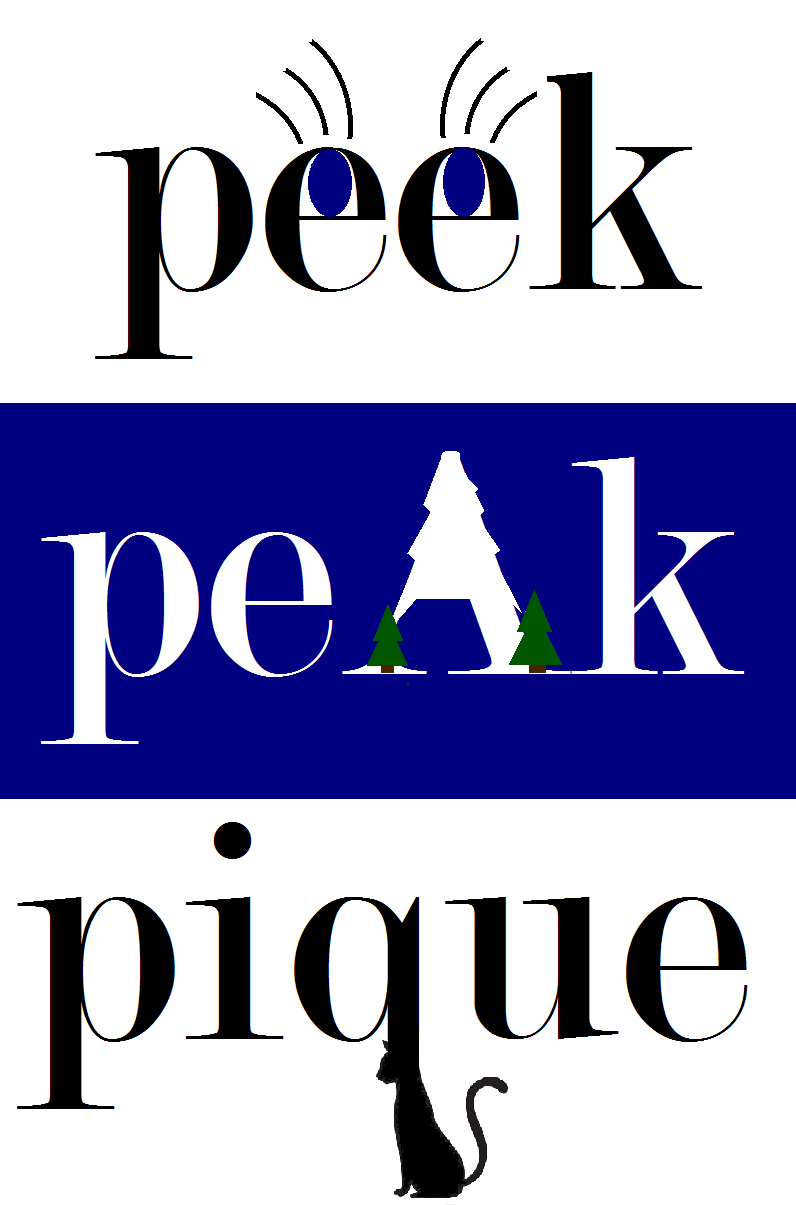
    Picture by Lisa Rivera


    Oh my word! My tips and tricks for peek, peak, and pique aren't nearly as cute and memorable as the ones Lisa Rivera has created in the picture above! In our curriculum materials, and on the web, I don't have access to that kind of graphic representation of words. I might have to look into that in the future!

    In the meantime, her picture says a thousand words--okay, well really just three:

    1. Peek
        a. Verb meaning a secretive look--And then I am going to peek into the package.
        b. Noun meaning a small glance--She took a peek into the package.
        c. Thus, the two EYES in the middle of the word peek in the graphic. (We do have that in our books, but we just tell it not show it--showing it is so much better!)


    2. Peak
       a. Verb meaning to reach the highest point---They said that the dancer was going to peak at just the right time.
       b. Noun meaning the highest point---They reached the mountain's peak.
       c. Adjective meaning highest point---They were at their peak performance.
       d. Love the graphic with the A being a high, mountainous point. 


    3. Pique'
       a. Verb meaning to arouse curiosity--They really tried to pique' our attention with those pictures.
       b. Noun meaning resentment--He slammed the door in a fit of pique'. (Use it interchangeably with "quick anger."
       c. Noun or adjective meaning nubby fabric--He wore his pique' bright yellow polo shirt.
       d. The verb is the most common meaning; and thus, we see the cat at the bottom of the q in the picture because "curiosity killed the cat." CLEVER!

    If you don't have that great picture above, here are ways to remember these three:

    1. Peek--has two e's, and we have two eyes and peek with our eyes
    2. Peak---not two e's OR They have a lEAK in the pEAK of their roof.
    3. Pique'--Ends with que---question begins with que

    Happy Wordy Wednesday! If you like our blog, share it with others! Put the FB link on your timeline, so others can learn with Language Lady each week! Smile...

    Wednesday, May 15, 2013

    WORDY WEDNESDAY: Write, Right, Rite, and Wright


    In my complete language arts books, I have a weekly lesson called "Wacky Words." When I began writing language arts books for a different publisher fourteen years ago, I did not have this section in my books. 

    Then I began testing...and testing...and testing...my materials. As I tested them, I discovered that even mature writers have difficulties with homophones (words that sound the same but are spelled differently and have different meanings). Then along came message boards, email groups, and FaceBook, and I discovered EVERYBODY has trouble with homophones. From these experiences, the Wacky Word lessons were born.

    This week I was thinking of the plays that our daughter is directing for a community youth program called The Young Playwrights. I have seen the word playwrights before, but this week, it struck me that we do not have that word in our Wacky Word lessons with write, right, and rite.

    Then, of course, I thought more (thinking is what I do!) and wondered why, if the children are writing plays, the term is not playwrite. So...that takes us to this Wordy Wednesday/Wacky Word post!

    The picture above gives us some idea of why the word is playwright and not playwrite. The picture is of a wheelwright shop--that is, a shop in which one crafts wheels.

    Though the word "wright" is most commonly associated with crafting with wood (wheelwright), the word "wright" is used in other contexts to indicate crafting or creating as well:

    playwright
    wheelwright
    shipwright
    millwright
    wainwright


    In that way, a playwright is not simply "writing" a play, but he or she is "crafting" something--perhaps he or she is even meticulously creating the script, like a wheelwright meticulously creates wheels.

    So our four "Wacky Words" for "Wordy Wednesday" can be remembered with the following tips:

    1. Write--to pen or scribe the written word

    2. Right--correct; opposite of wrong; from the fight, might, light family, phonetically speaking

    3. Rite--a ritual or ceremony; a rite of passage (This makes the Rite-Aid stores all spelled wrong--unless they mean "aid" for a ceremony or passage, which I don't think they mean. I think they want to say that their stores give the "right" kind of aid/assistance.)

    4. Wright--a crafter, especially of wooden creations    


    Friday, April 19, 2013

    Antidote vs. Anecdote


    Are you confused by antidote and anecdote--like I have been a lot of the time?

    Remember these tips:
    ~antidote--has anti in it, like an antibiotic--so it is a treatment, like an antibiotic

    ~anecdote--a little tidbit of info (an/ec/dote---not ECT....just EC...I often misspelled this one!)

    Proper Use of Myself


    Wonder when to use the word myself? Well, it shouldn't be used nearly as frequently as it is! 


    Why? Because myself should only be used one the pronoun I has already been used earlier in the sentence. 

    Wrong: She gave it to myself and him.
    Wrong: My husband and myself are thankful for this gift.
    Wrong: I asked him to give it to myself.


    Right: I asked for it myself.
    Right: I was hoping to win it myself.
    Right: I went to town quickly because I had to see it for myself.


    Remember: Don't use myself unless you have already used I.

    When You Want to Say It Is!


    It's, it's, it's, it's, it's.....you want to say it is! 


    Advice vs. Advise

    Would you take adviCe from this guy? Or do you like to have more sophisticated people adviSe you?


    Anybody out there tired of seeing people give other people adviSe (zuh--wrong one!) and trying to adviCe (suh--wrong one!) them? Yeah, me too.

    Generally speaking, when you have two word choices with C and S as their options for spelling, it is because you need two completely different sounds:

    -adviCe---The c is here because this word needs the soft sound of C (suh)

    -adviSe--The s is here because this word needs the hard sound of s (zuh)

    Remember: When a c is followed by an e, i, or y, it usually says its soft sound--suh.

    Also remember that when a multi-syllable word has se in it as the end of a syllable, it often makes the zuh sound: please, wise, fuse, close, etc. (though certainly not always).

    The real key is that there ARE two spellings--and one is the noun and is soft (adviCe) and one is the verb and is hard (adviSe).

    When you set out to adviSe somebody, be sure you have enough wisdom to give sound adviCe..... :)

    Wednesday, April 17, 2013

    WORDY WEDNESDAY: acceleration vs deceleration


    The other day I looked down on my steering wheel to find these two abbreviations: accel and decel. I am sure that these are the formal abbreviations, and I also assume that the two are abbreviations for acceleration and deceleration.

    The two words are perfect words for working on two of my favorite "wordy" sub-lessons: spelling and prefix/root studies.


    As a self-declared bi-phonic woman, I love to point out spelling rules any time there is the slightest bit of phonetic consistency to them. And, it just so happens, that acceleration and deceleration have a little bit of consistency to their spellings:

    1. Hard and soft c
         a. ac/cel/er/a/tion
            i. The first c says kuh because it is followed by a c. (When a c or g is followed by a, o, u, or most consonants, it says its hard sound---kuh or guh.)
            ii. The second c says suh because it is followed by an e. (When a c or g is followed by e, i, or y, it says its soft sound--suh or juh.)
         b. de/cel/er/a/tion--This word only contains one c, and that c makes its soft sound (suh) because it is followed by an e.

    2. Both spelled the same from then on--syllable by syllable
        a. After our cel phonemes, the remainder of each word is spelled the same.
        b. Both can be spelled syllable by syllable at that point
           i. er
           ii. a
           iii. tion

    3. Thus, you can easily remember how to spell both words.
        a. ac/cel and d/cel
        b. er/a/tion (for both)

    +Note: If acceleration only had one c, the first two syllables would look ("sound") like this: a/sell (ay/sell).
    +Note: If deceleration had two c's, the first two syllables would look ("sound") like this: dek/sell.


    If you are not a lover of phonics or you learned to read and spell through sight words and memorization, you might be bored by now, so I will give you something you can take with you from this "wordy" lesson--deciphering meaning from roots and affixes (prefixes and suffixes).

    First of all, remember this: You know more than you think you know!

    Applying that to our two words: What do you already know about their meanings:

    1. They have something to do with movement (on the steering wheel of a car; you hear them association with physics, etc.).

    2. De is a prefix you are familiar with--it usually means the opposite.
       a. de-frost--unfrost
       b. de-value--not to value
      
    3. tion--Tion (and sion words) words are usually nouns
       a. nation
       b. hypertension
       c. limitation


    If you already knew those things (and now you do!), take what you already know and add it to what else you might learn about these two words:

    1. ac--Prefix meaning toward

    2. In physics, these two words have much more technical meanings that we do not need to concern ourselves with for this lesson. (A part of learning is knowing what you do not need to know!)

    3. In medical terms, these two words have to do with getting hurt via a collision (still retaining the general meaning of movement).

    4. The suffix cel can have something to do with movement or an action
       a. cancel
       b. excel


    Okay, you have all of the information to unlock the definitions (and the spellings, thank-you very much!) of these two words.

    Acceleration/Deceleration

    A. They have something to do with movement (cel)
    B. They are nouns (tion)
    C. One means forward (ac--toward)
    D. The other means backwards or not or undo (de).
    E. Acceleration means to move forward.
    F. Deceleration means to move backwards (de) or not to move.


    Wasn't that fun? :)


    *For complete steps on "dissecting" words, see the posts about Character Ink's teaching methods we call Definition Dissection. Here is a list of prefixes to get you started: http://languagelady365.blogspot.com/2011/01/days-13-14-roots-and-affixes-list.html


    Wednesday, April 10, 2013

    WORDY WEDNESDAY--Lonnnnnggg Homophone Quiz!


    . Fill in each blank provided with the correct Wacky Word---their, there, they’re, wander,             
                   wonder, scent, sent, farther, further, bear, or bare.

        1.  ________________ meeting us for lunch.
        2. We are going to ________________ the nursing home to sing.
        3.  ________________ rarely on time.
        4.  ________________ lake is just ahead.
        5. When we get  ________________, we will eat.
        6. We do not know what ________________ going to sing.
        7. Ray and Donna parked ________________ car in the parking garage.
        8. We should be ________________ after lunch.
        9. Maelynn thinks she left her keys ________________.
      10. ________________ going to drop off the food at noon.
                    11. I ________________ what time it is.
                    12. Please don’t ________________ around the woods too far.
                    13. We could ________________ all day without a map.
                    14. Jonathan ________________ what time it is.
                    15. I ________________ if the Reishes are coming.
                    16. Donna ________________ the card in the mail.
                    17. Jonathan ________________ Maelynn flowers for Valentine’s Day.
                    18. The dogs picked up the ________________ of the drugs.
                    19. Did she get the email I ________________ her?
                    20. The  ________________ of the candle filled the room.
                    21. After church, he explained that concept ________________ .
                    22. The  ________________ we go, the more lost we are!
                    23. We can discuss the matter  ________________ when everyone gets here.
                    24. I believe the store is  ________________ down the street.
                    25. That restaurant is  ________________ than this one.
                    26. I hope we don’t see a  ________________ while walking the trails.
                    27. She gave her sister a stuffed  ________________ for Christmas.
                    28. You should put sunscreen on your  ________________ skin.
                     29. The   ________________ slept in the warm sun after his hibernation.
                     30. My  ________________ feet are dirty from walking in the strawberry patch.


    Answer Key:

        1.  They’re  meeting us for lunch.
        2. We are going to wander to the nursing home to sing.
        3.  They’re  rarely on time.
        4.  Their  lake is just ahead.
        5. When we get  there , we will eat.
        6. We do not know what  they’re  going to sing.
        7. Ray and Donna parked  their  car in the parking garage.
        8. We should be there after lunch.
        9. Maelynn thinks she left her keys there .
                      10. They’re going to drop off the food at noon.
                      11. I wonder what time it is.
                      12. Please don’t wander around the woods too far.
                      13. We could wander all day without a map.
                      14. Jonathan wonder what time it is.
                      15. I wonder if the Reishes are coming.
                      16. Donna sent the card in the mail.
                      17. Jonathan sent Maelynn flowers for Valentine’s Day.
                      18. The dogs picked up the scent of the drugs.
                      19. Did she get the email I sent her?
                      20. The  scent of the candle filled the room.
                      21. After church, he explained that concept further .
                      22. The  farther we go, the more lost we are!
                      23. We can discuss the matter  further when everyone gets here.
                      24. I believe the store is  farther down the street.
                      25. That restaurant is  farther than this one.
                      26. I hope we don’t see a  bear while walking the trails.
                      27. She gave her sister a stuffed  bear for Christmas.
                      28. You should put sunscreen on your  bare skin.
                      29. The  bear slept in the warm sun after his hibernation.
                      30. My  bare feet are dirty from walking in the strawberry patch.


    WORDY WEDNESDAY--Homophone Tips


     "Homophone, homophones, homophones...homophones!" (Veggie Tales)

    Adults and children alike make homophone errors. They are probably some of the most common grammatical errors. We like to teach our students little tricks to help them remember which word to use in which situation. Below you will find some tricks--followed by a quiz! Smile...


    Here are some serious and some funny tips to help you remember some homophones:
               a. their—heir is in it; their shows ownership; heir shows ownership too
               b. there—here is in it; here and there; use for there are and there is
               c. they’re—contraction they are; say contracted words uncontracted to be sure that you are             
                  using the correct word for the job
               d. wandering—you wander in an area; you wander around
               e. wonder—you ponder when you wonder
               f. scent—cats have a certain scent when their litter box needs cleaned
               g. sent—envelopes are sent
               h. farther—farther refers to area (has root far)
               i. further—further refers to understanding                                                                       
                j. bear—a bear is a creature                                                                                             
              k. bare—ends in an e; when we bare something, we expose it


    Part of being a good learner and a good student is knowing how you learn—and working in those areas. For example, the author of CQLA loves mnemonics and tricks. (Can you tell?) Other people are distracted by that type of learning.

    What kind of learner are you? What helps you learn homophones the best? What helps you learn to spell difficult words? Work in those areas to help you learn better, faster, and more thoroughly.

    Wednesday, February 20, 2013

    Wordy Wednesday: Conscience vs Conscious


    I try to use mnemonics, tricks, songs, and jingles to teach parts of speech, homophones, and any other grammar and usage tips that I can. Students (of all ages, including adults!) often remember usage better when a trick or tip is applied.

    One of my students' favorite tricks is for the confusing word pair (sometimes considered homophones, though they do have slightly different pronunciations) conscience/conscious:


    The student's conscience bothered him because he tried to con the science teacher. 

    He wasn't conscious enough to enjoy the delicious treat. 

     In today's assignment, my students had to write sentences using conscience and conscious (one sentence each). My amazingly clever students had fun with this! Three of them used both words in one sentence and included the "trick" in that sentence too!

    1. I conned the science teacher while I was conscious, and my conscience bothered me.

    2. He wasn't conscious of the fact that he conned the science teacher; once he realized he had, his conscience bothered him.

    3. He had a guilty conscience after he consciously conned the science teacher. 


    Wednesday, February 6, 2013

    Wordy Wednesday--FACADE


    WORDY WEDNESDAY

    You know what one of my least favorite words is? FACADE.

    First of all, I work week in and week out to try to teach that an A, O, U, or most consonants make the C say "kuh." That would make this word fuh-kade, right? (Or even fay-kade.) Unfortunately, that is wrong.

    It is pronounced fuh-sodd. (That A really doesn't make the C say "kuh.")

    That clearly makes this word a FAKE, which is one of its only redeeming qualities--it means what it looks like! Smile...

    That bring us to the second aspect of the word--its meaning. It is a noun that means "a face of a building or a superficial appearance."

    In that regard, it is as it is pronounced--even though it isn't pronounced like it is spelled (which is true of many words that came from somewhere else).

    So it is easy to learn the meaning of---it has to do with what it sounds like--FACE (albeit, a fake face). But it is not spelled as one would think.

    So, don't put on a facade today! Don't try to put on a superficial front or fake face. Be yourself!

    Tuesday, January 22, 2013

    Everyday vs Every Day


    Do you like to read Language Lady everyday or every day? Let me help you with that!


    Every day
    1. Two words
    2. An adjective (every) describing a noun (day)
    3. Used when you want to say EACH day or ALL days.


    Everyday
    1,. One word
    2. Usually an adjective together (the entire word is an adjective--everyday)
    3. Used when you want to say something is NORMAL or TYPICAL.


    Tips:

    1. Every day is an adjective and noun together already--do not use these two words to describe another noun! (NO: Those are our every day dishes.)

    2. Everyday is an adjective alone--use it to describe another noun. (YES: Those are our everyday dishes.)


    Tricky Trick to Help It Stick: A wise grammarian recommends "testing" your words by seeing if you could put the word "single" in between every and day. (EACH single day):

    1. If you can put "single" in between the two words, then you want the two separate words meaning EACH day...every single day:

    a. I went to the mail box every SINGLE day. I went to the  mail box every day.
    b. She wrote him a letter every SINGLE day. She wrote him a letter every day.


    2. If you cannot put "single" in between the two words, tehn  you want the one word meaning typical or normal:

    a. I wanted to use the every SINGLE day dishes. NO. I wanted to use the everyday dishes.
    b. She is the every SINGLE day kind of gal. NO. She is the everyday kind of gal.


    So...to answer the first question: You like to read Language Lady every day (each day) because she is not your everyday (typical) grammar teacher! Smile...